
Student Advocacy Day
VIRTUAL WORKSHOP SERIES
Advancing American Values Through Social Work & Democracy
The Art of Strategic Advocacy
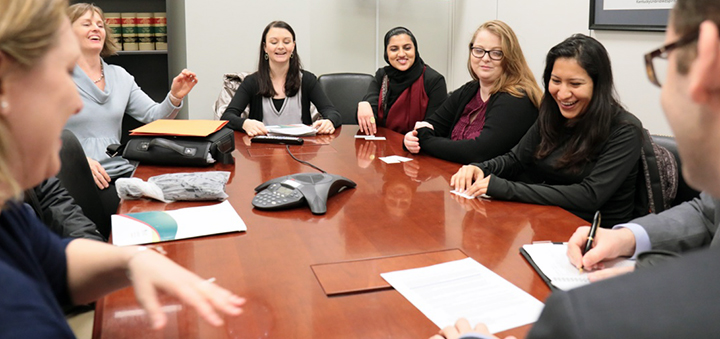 Four Virtual Workshops Preparing Students To Make A Difference
Effective advocacy requires more than passion and commitment. It requires understanding how decisions are made, communicating persuasively, and having a strategy for achieving meaningful results.
As part of the 2027 Student Advocacy Day experience, the Congressional Research Institute for Social Work and Policy (CRISP) is offering four monthly, one-hour virtual workshops led by Dr. Charles E. Lewis, Jr., CRISP's founding director and former Deputy Chief of Staff to Congressman Edolphus Towns.
Drawing on his experience in congressional leadership, public policy, communications, and social work, Dr. Lewis will introduce participants to the principles of The Art of Strategic Advocacy: Finding the Balance Between Passion and Reason.
The workshops are designed to help students develop the knowledge, critical thinking, and practical skills needed to become effective advocates—not only on Capitol Hill, but wherever important policy decisions are made.
All four workshops will be recorded and available on demand to registered participants.
Student Advocacy Day Workshops
WORKSHOP 1
The Art of Strategic Advocacy: What Are You Trying to Accomplish?
WED, December 2 | 7 PM ET
Passion motivates advocacy, but passion alone does not produce results. Effective advocacy begins with a fundamental question: What are you trying to accomplish?
Are you seeking to raise awareness, change legislation, secure resources, influence public policy, or build relationships with decision-makers? Each objective requires a different strategy.
This introductory workshop explores the importance of balancing passion with reason, establishing clear objectives, and distinguishing advocacy activities from measurable accomplishments. Participants will learn why strategic thinking, preparation, and an understanding of political realities are essential to achieving meaningful change.
WORKSHOP 2
Demystifying the Legislative Process: How Congress Really Works
WED, January 6 | 7 PM ET
How does an idea become public policy? Why do some legislative proposals advance while others never receive serious consideration? And where can advocates make a difference?
Congress operates according to an elaborate system of rules and procedures, but it is also a political institution shaped by competing interests, relationships, negotiations, and the exercise of power.
This workshop examines Congress's basic structure, the legislative process, and the roles of elected officials, congressional staff, and committees. Special attention will be given to political feasibility—understanding what can realistically be accomplished, under what circumstances, and with whose support.
Participants will consider a critical strategic question: When the change we seek is not politically feasible, do we change our goals, change our strategy, or work to change the political environment?
WORKSHOP 3
What You Say and How You Say It Matters
WED, February 3 | 7 PM ET
Words can inspire action, build coalitions, and influence public policy. They can also create misunderstanding, provoke resistance, and undermine otherwise worthwhile objectives.
Effective advocates understand their audiences and recognize that how a message is communicated can be as important as the message itself.
This workshop explores persuasive communication, including message development, storytelling, translating research into accessible language, and framing issues for different audiences. Participants will examine how public opinion, political considerations, and competing perspectives influence the reception of advocacy messages.
The workshop will also introduce the strategic use of traditional and digital media, artificial intelligence in advocacy communications, and lessons from advocacy campaigns that succeeded—or failed—to achieve their objectives.
WORKSHOP 4
What Will You Do When You Enter the Room?
WED, March 3 | 7 PM ET
You have secured a meeting with a congressional office. Now what?
An effective congressional meeting begins long before participants enter the room. Preparation requires knowing whom you are meeting, understanding their interests and responsibilities, developing a clear message, and determining precisely what you want to accomplish.
This workshop provides practical guidance for preparing for and conducting meetings with members of Congress and their staff. Topics include researching congressional offices, identifying decision-makers, organizing delegation roles, making specific legislative requests, responding to difficult questions, and following up after the meeting.
Drawing on firsthand congressional experience, the workshop will feature a simulated meeting with a current or former congressional staff member, illustrating both effective advocacy techniques and common mistakes.
Participants will leave better prepared to make the most of their Student Advocacy Day congressional visits—and future opportunities to influence public policy.
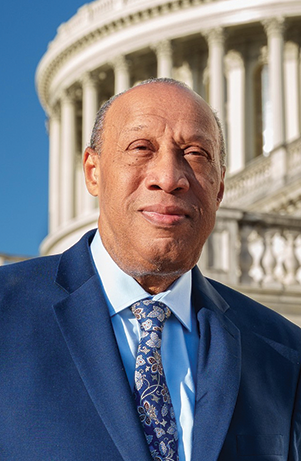
PRIMARY INSTRUCTOR
Charles E. Lewis, Jr. is a social work policy advocate, communicator, and educator whose career has spanned journalism, academia, congressional service, and national advocacy. As the founding director of the Congressional Research Institute for Social Work and Policy (CRISP), he works to strengthen social workers' and social work students' engagement in public policy and the legislative process.
Dr. Lewis brings an unusually broad communications background to his work. Early in his career, he worked as a journalist and studied journalism at City College of New York. Over the years, his communications experience has included journalism, speechwriting, public speaking, policy messaging, congressional communications, blogging, and advocacy campaign development. He is the author of the long-running Beyond Advocacy blog and is developing The Art of Strategic Advocacy: Finding the Balance Between Passion and Reason, a book examining the judgment, communication skills, and strategic thinking required to become an effective advocate.
He earned his PhD in social policy and policy analysis from the Columbia University School of Social Work. His interdisciplinary graduate training included public opinion, econometrics, and quantitative policy analysis with Columbia political scientist Robert Shapiro, as well as coursework and additional study at the Columbia University School of Journalism. That training helped shape his approach to advocacy: understanding not only what the evidence says, but how people interpret information, how public opinion develops, and how advocates can communicate complex ideas effectively without simply telling people what to think.
Dr. Lewis also brings firsthand experience with the federal legislative process. He served as Deputy Chief of Staff and Communications Director for Congressman Edolphus “Ed” Towns of New York and helped establish the Congressional Social Work Caucus. Since leaving Capitol Hill, he has continued working at the intersection of social work, public policy, communications, and civic engagement through CRISP, Social Work Day on the Hill, Student Advocacy Day, and other initiatives designed to bring social work knowledge and values more directly into public decision-making.
In this four-part webinar series, Dr. Lewis draws on these experiences to help students move beyond advocacy as a set of activities and begin thinking about what it means to become a strategic advocate—someone who can analyze an issue, understand an audience, communicate persuasively, navigate political realities, and remain grounded in purpose and principle.